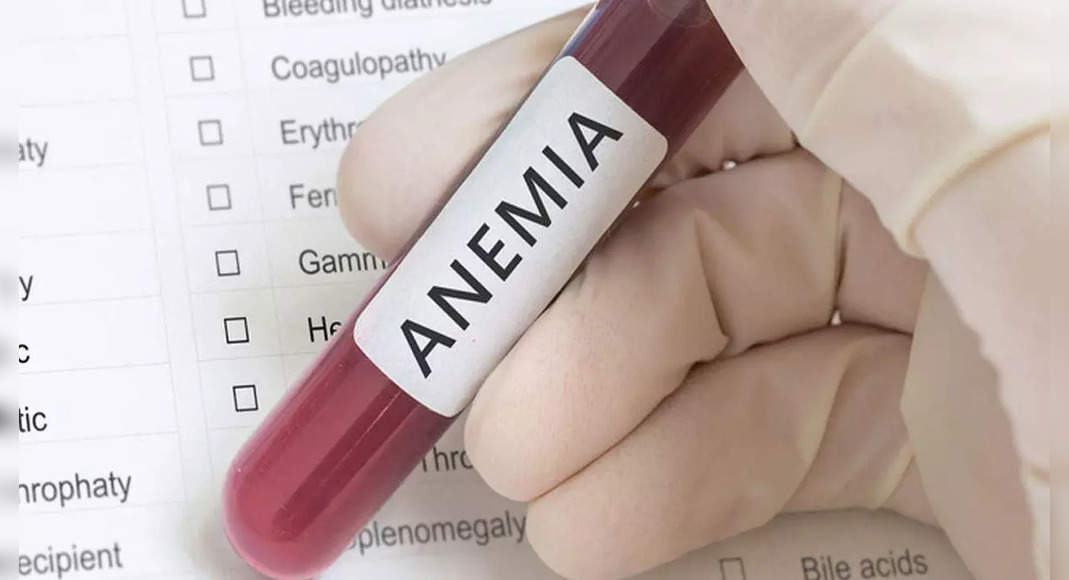
Gurugram: Haryana will conduct a survey for a week to assess the prevalence of anemia at the end of November.
This study aims to provide treatment and counseling for subjects that meet the requirements diagnosed with mild, medium and severe anemia.
Cross-sectional surveys will be carried out at 60 clusters – 40 rural and 20 urban areas – in each district.
When the composition of the urban population is higher in Gurugram and Faridabad, the ratio will be reversed, i.e., 40 clusters will be urban and 20 will be rural.
In each cluster, 50 random samples will be taken from the target group.
Thus, a total of 66,000 samples – 3,000 of each of the 22 districts – will be collected.
The target group has been widely classified into five categories – babies (between six months and 5 years), children aged between five and nine years, adolescents (aged 10 to 19), women reproductive age groups (20-24 years), and Pregnant and breastfeeding women.
While 10 samples each will be taken in the first two categories, 14 samples will be collected in the third, and eight each in the last two.
Gurugram Chief Medical Officer Virender Yadav said that the Ministry of Health was preparing a list of subjects who qualified with their contact details.
“While the survey will begin in the last week of November, the training will begin in the first week.
In addition to taking samples, a team will also provide point-of-care care and diet counseling.
The hemoglobin test will be carried out by our lab.
Those who anemia will be given care According to the ‘Anemia Mukt Bharat’ guide.
Our team will also merege people about the importance of iron-rich diets and protein, worms and optimal physical activities, “CMO said.
He added that the survey would help in planning evidence-based interventions and preparing future strategies to overcome anemia in the state.
Such surveys were carried out by national families and health care in 2016.
In accordance with the research, in Haryana, around 72% of children aged between six months and four years were anemia and 62.7% of women had iron deficiencies.
Haryana to conduct anemia survey at the end of November