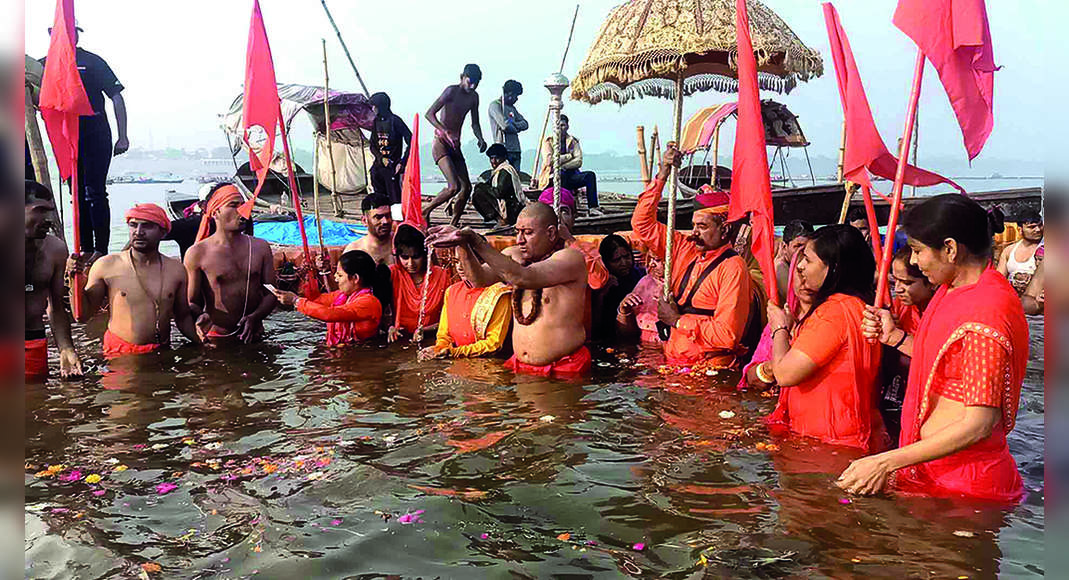
Prayagraj: After a two-year gap, worshipers from districts and distant countries began to arrive in Sangam to do the Pitru Papha ritual.
Pitru Pakha, starting from Tuesday, observed by Hindus to offer peaceful prayers to their ancestors.
This year, Pitru Pakha will lead to October 6.
Interestingly, the worshipers arrived at Sangam to do rituals, contact Panda and Imam sitting on the edge of Ganges during Pitru Pakha while tracing their family roots.
Shiv Shankar, a priest on the edge of the Ganges told Tii that they kept detailed records of every worshiper who came to them to offer prayers to ancestors.
He added that the majority of worshipers were pulled towards the Sangam to trace the roots because the record holds the details of their ancestors including when they last visited the place.
“When these worshipers start their journey from their village \ Block \ City, they have a complete idea and details of the panda they have to visit to do rituals say other priests who add many families to come to Sangam to immerse the ash or offer ‘Pitru Daan’ And after arriving on the banks of the Ganga River, they found the names of the ancestors who had visited the city of Sangam “, he added.
This pandas, better known as the flag rather than their name, has carefully maintain the chronology of the family of every pilgrim, regardless of the time period when pilgrims visit this city.
And move with time, new age panda is ready to help their JAJMAN (clients) on the internet too because some have their own websites.
The client on their side also contacted the Pandas concerned before starting their journey through technology.
The practice of maintaining this vital note has continued for generations and the whole family is usually involved in maintaining them.
After pilgrims contact them, this panda takes care of everything that is needed by deviations, from doing rituals to take a boat.
Panda also follows the old ritual to maintain records.
They kept detailed records of the names of each family member, including their address in large-size books wrapped in red cotton fabrics called ‘bahi’.
To save notes, the name was written by Munshi (officer) and then the signature of Jajman (client) was taken for authenticity.
In addition, the Panda \ priest flag also told the typical symbols because the signs of the flag talked about the signs they had ” The moon cycle.
He said that this was a significant 15-day period and rituals such as Tarpan and Shradh were carried out to pay respect to relatives / ancestors who died.
It is believed that souls that are not happy from the deceased return to earth to see their family members.
That, to ensure they reach Moksha, people satisfy their thirst and satisfy their hunger by doing ‘Pind Daan’.
In addition, the prayers offered, and rituals are carried out to help souls be released from birth cycles, life and death.
Worshipers from other countries arrived in Sangam to do the Pitru Papha ritual